After 50, Most Men Have This Hidden Prostate Problem — And Their Doctor Never Mentions the Real Cause
New research points to a surprisingly overlooked vascular mechanism that may explain why so many men over 50 struggle with interrupted sleep, weak urine flow, and declining energy — even when routine tests come back "normal."
Prostate Health Hub · April 2026
At 57, David hadn't slept through the night in almost three years. He was up two, sometimes three times, shuffling to the bathroom in the dark. By morning, he felt like he'd barely rested at all. His energy through the day was flat. His mood was short. His wife noticed before he did.
"The doctor ran the usual tests," David recalled. "PSA was borderline, but nothing alarming. He told me it was just… aging. Said most men go through it."
David went home with a pamphlet and no answers. He tried cutting fluids after dinner. He set alarms to wake himself before the urge did. Nothing worked for long. The cycle continued — interrupted sleep, low energy, growing frustration.
What neither David nor his doctor discussed was something researchers have been quietly investigating for years: the relationship between prostate blood flow, a molecule called nitric oxide, and why prostate function often declines much earlier and faster than men expect.
The Vascular Layer Most Men Don't Know About
The prostate is one of the most vascularly dependent organs in the male body. It requires a consistent, healthy supply of oxygenated blood to maintain proper cellular function — and to manage the delicate balance of tissue around it.
At the center of this process is a molecule called nitric oxide (NO). Nitric oxide acts as a natural signal to the smooth muscles inside blood vessel walls, prompting them to relax and widen — a process called vasodilation. When nitric oxide levels are healthy, blood flows freely. When they decline, vessels constrict, circulation slows, and tissues — including prostate tissue — receive less of everything they need.
A 2023 study from Fukushima Medical University in Japan examined the relationship between blood circulation and stromal cell activity around the prostate — the type of cellular buildup most commonly associated with the sensation of urinary urgency and incomplete emptying. The researchers found that supporting healthy blood flow in and around the prostate appeared to have a meaningful impact on cellular metabolization in that region.
For men like David, this offers a very different lens. The issue may not be the prostate itself — it may be what is or isn't reaching it.
Why "Wait and Watch" Often Makes Things Worse
The standard clinical advice for mild-to-moderate prostate symptoms is often watchful waiting — monitor the situation, avoid triggers, come back in six months. For many men, that translates to years of disrupted nights and quiet frustration.
The problem with this approach, some researchers argue, is that it addresses none of the underlying vascular mechanisms. It treats symptoms as inevitable rather than as signals worth investigating.
"I'd been dealing with the nighttime trips for years. I assumed it was just what being 60 meant. When I actually understood what was happening at the vascular level, it changed how I approached the whole thing."
The Botanical Compounds Researchers Keep Coming Back To
Over the past decade, a growing body of research has explored plant-derived compounds that appear to support nitric oxide production, prostate blood flow, and cellular health in men over 50. Several ingredients have surfaced consistently across multiple independent studies.
Used for centuries in Southeast Asia to support male vitality, it has been studied for its role in supporting testosterone balance, prostate circulation, and antioxidant defense in prostate tissue.
An adaptogenic herb with a documented history spanning thousands of years. Research has explored its role in reducing oxidative stress, supporting detoxification pathways, and maintaining healthy prostate function.
Widely studied for its effects on blood flow and energy at the cellular level. Researchers have noted its potential to support healthy circulation — including in prostate-adjacent tissue.
Used in European herbal medicine for urinary and prostate health. Studies have examined its role in supporting healthy sex hormone metabolism and reducing urinary frequency in aging men.
A trace mineral found to support testosterone metabolism, inflammation response modulation, and prostate cell health. Research links adequate boron intake to improved prostate outcomes in older men.
A Peruvian root vegetable studied for its effects on energy, libido, and male reproductive health. Increasingly examined for its role in supporting stamina and mood in men over 50.
Researchers note that these compounds appear to work best in combination — supporting multiple pathways simultaneously rather than targeting a single mechanism. This synergistic approach is increasingly reflected in newer supplement formulations designed for comprehensive prostate support.
What Men Who've Taken This Approach Are Reporting
"First time I slept more than 4 hours straight in two years was about three weeks in. I didn't even realize how tired I'd been until I wasn't tired anymore."
"My wife actually asked me what I was doing differently. My energy is better. I'm more present. The bathroom trips at night have dropped dramatically."
"I was skeptical — I've tried a lot of things. But the science behind the blood flow angle made sense to me. I gave it 90 days. I'm glad I did."
A Formulation Worth Looking At
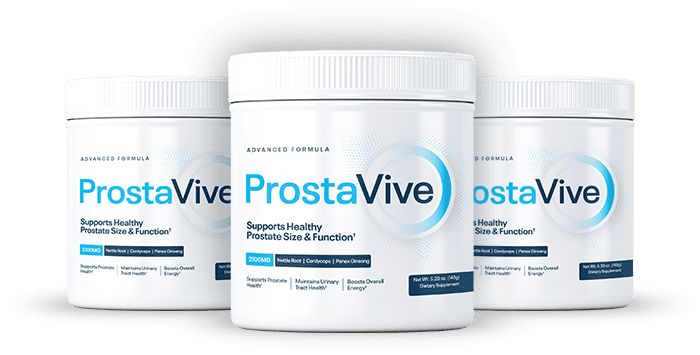
One product that has emerged in this category is ProstaVive — a powdered daily supplement that combines several of the botanicals discussed above, along with zinc, magnesium, and vitamin D, in a single formulation designed around the nitric oxide and prostate blood flow mechanism.
Unlike most capsule-based supplements, ProstaVive uses a powder delivery format — which some researchers suggest may support better absorption of fat-soluble and synergistic botanical compounds compared to compressed tablets.
The formulation also includes a 180-day satisfaction guarantee — a meaningful signal that the vendor stands behind the product for men who want time to evaluate results properly before committing.
Curious About ProstaVive?
Visit the official page to review the full ingredient list, current pricing, and availability. Supplies are reported to be limited.
View Official ProstaVive Details →Disclosure: this article may contain affiliate links. We may receive compensation for purchases made through links on this page.
What to Consider Before Starting Any Supplement
As with any dietary supplement, results will vary from person to person. Men who are currently taking medications — particularly those for blood pressure, blood thinning, or existing prostate conditions — should speak with their healthcare provider before adding any new formulation to their routine.
The research on botanical prostate support is promising but still developing. No supplement is a substitute for regular medical evaluation, particularly for men who have not had a recent PSA test or urological review.
That said, for men who have already gone through standard evaluations and are looking for a nutritional approach to support what their doctor called "normal aging" — understanding the vascular mechanisms involved, and choosing formulations that address them directly, may be a more informed next step than simply waiting.
Ready to Review the Full ProstaVive Details?
Check the official page for the complete ingredient breakdown, package options, and current availability.
See Official Details & Current Pricing →Disclosure: this article may contain affiliate links. We may receive compensation for purchases made through links on this page.